
Water quality
Why Do Pools Turn Cloudy?
Cloudiness is a symptom. Finding its cause takes more than adding another product.
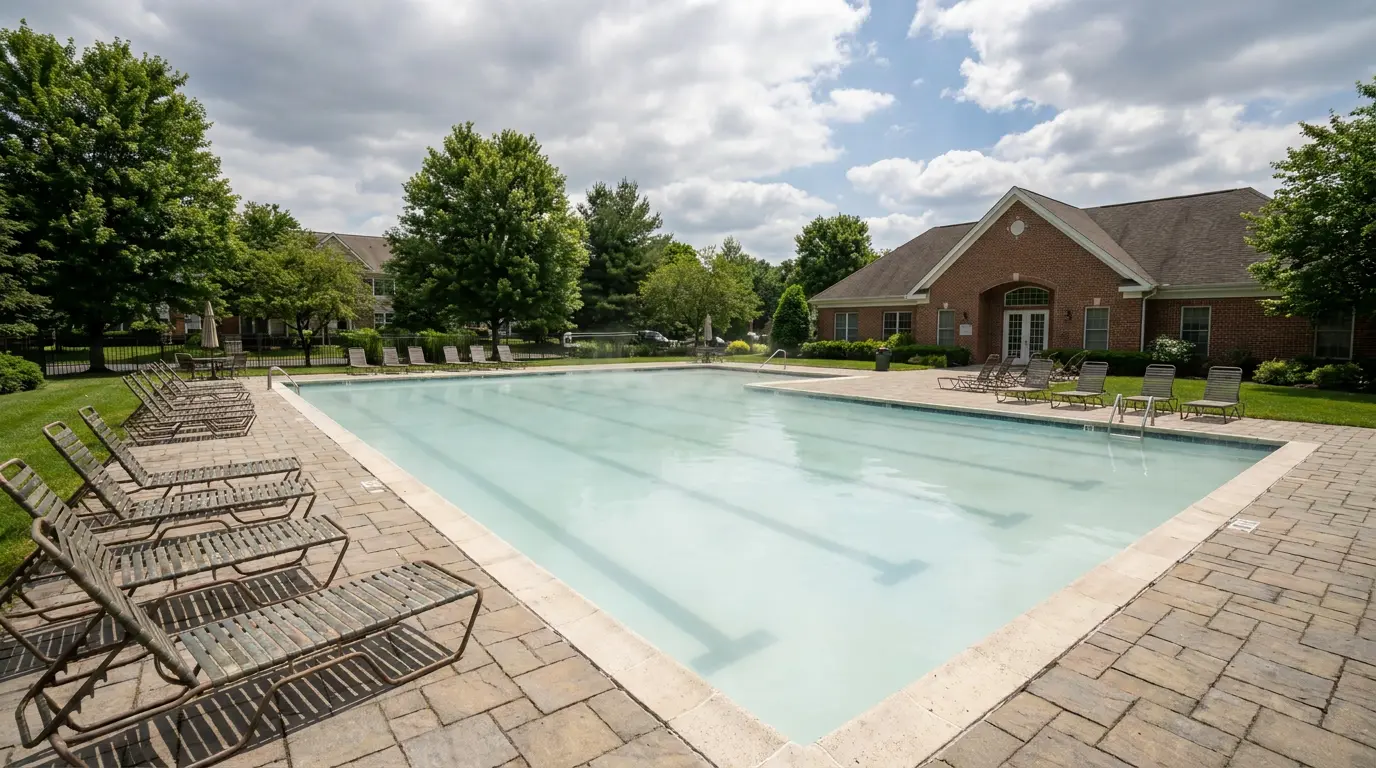
Look at circulation and filtration
Fine particles can remain suspended when a filter needs service or water is not circulating as intended. Check the operating schedule, baskets, filter condition, and pressure against the equipment manufacturer’s guidance. A pressure reading means more when you know the normal clean-filter baseline.
Test before treating
Disinfectant, pH, alkalinity, and other water-balance factors influence clarity and treatment performance. Use an appropriate test method and follow applicable operating requirements. Guessing from appearance can lead to unnecessary chemicals and still leave the real cause unresolved.
Account for weather and swimmers
Heavy use, sunscreen, windblown debris, and rain can change a pool’s treatment demand. Keep records of test results, chemical additions, and unusual conditions. Patterns in those records can help an operator distinguish a recurring equipment issue from a temporary increase in demand.
Clarity is a safety issue
If required visibility is lost, keep swimmers out and follow applicable closure and reopening requirements. Clear-looking water alone does not prove that a pool is safe, either. A qualified operator should confirm both water quality and visibility before the pool returns to use.