
Seasonal care
Closing a Pool for Winter: What Actually Matters
A thoughtful closing protects more than the water. Here is what New Jersey pool owners should plan before freezing weather arrives.
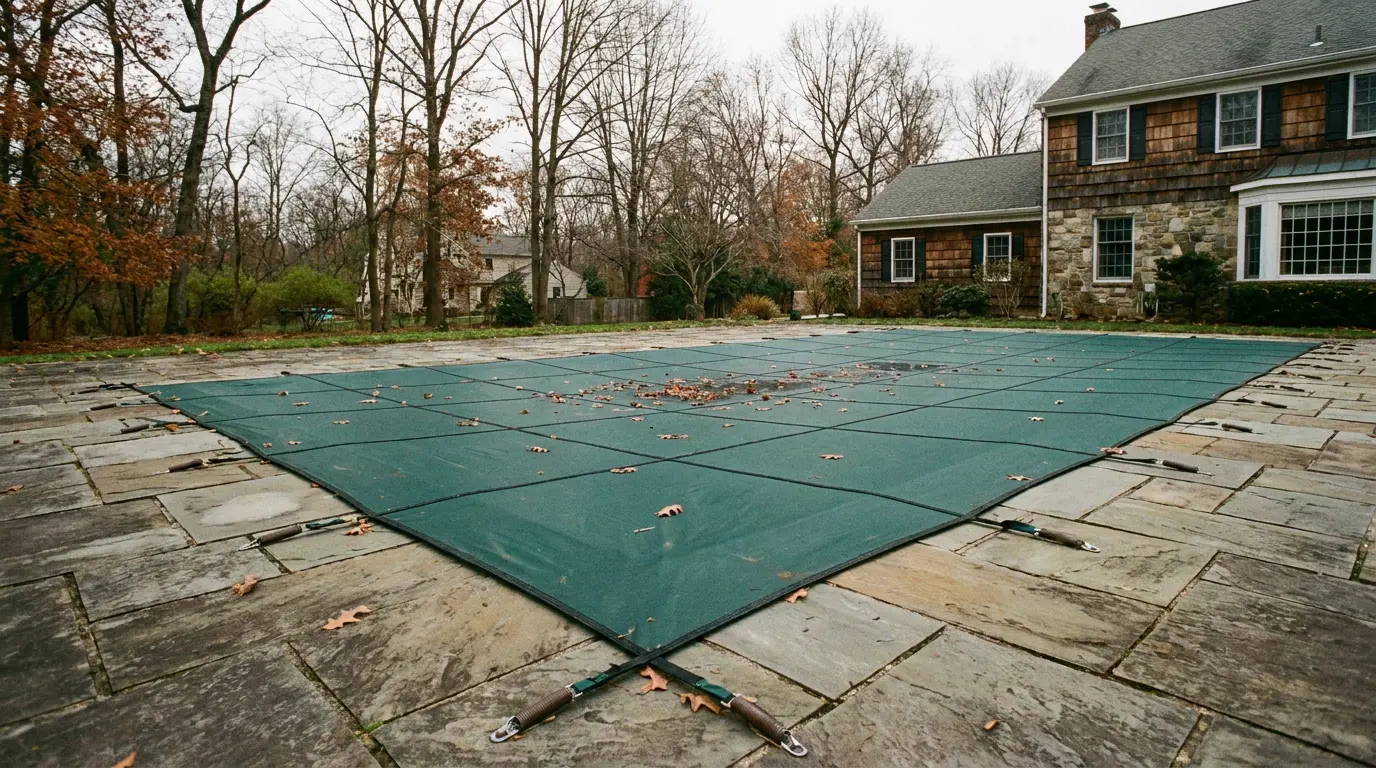
Start with the condition of the pool
Winterization is more than putting on a cover. Before closing, check the pool structure, circulation equipment, ladders, and fittings for damage. Record any leaks or unusual equipment behavior while the system is still running; a problem that is easy to spot in October can be harder to diagnose in spring.
Protect equipment from freezing
Water left in vulnerable plumbing and equipment can expand when it freezes. The correct process depends on the pool, plumbing layout, and manufacturer instructions. Have a qualified pool professional prepare lines, pumps, filters, heaters, and other components. Lowering water too far can damage some pools or covers, so avoid a one-size-fits-all water-level rule.
Treat the cover as safety equipment
Use a cover appropriate for the pool and inspect its anchors, straps, and condition. A winter cover is not automatically a safety cover. Keep gates secured, remove standing water as the cover manufacturer directs, and keep children and pets away. Never walk on a pool cover.
Keep a winter check-in schedule
A closed pool still needs attention. Check after storms for displaced covers, debris, and changing water levels. Keep a written closing record and a spring repair list. That small habit helps the next opening begin with fewer surprises.